

Pest control customers do not all search the same way. One person may need termite treatment, another may be looking for a pest-control company nearby, while someone else may be trying to identify ants, rodents, or signs of an infestation before deciding whether professional help is needed.
Pest control SEO is the process of making a pest-control company’s website and local search presence easier to find for relevant searches. A useful strategy connects individual pest services, the areas the company serves, local business information, seasonal demand, and educational content instead of treating SEO as a single homepage optimization project.
Quick Answer: Pest control SEO helps a pest-control business build search visibility around the services it provides, the locations it serves, and the pest problems potential customers research. A practical strategy typically combines focused service pages, useful location targeting, local SEO, clear website structure, relevant informational content, internal linking, and ongoing performance measurement.
What Is Pest Control SEO?
Pest control SEO is the process of improving a pest-control company’s search presence so relevant potential customers can discover its services when researching pest problems, treatment options, or local providers.
For a service business, that usually means more than optimizing one page for a broad phrase such as “pest control.” The website may need to represent several types of demand: specific pest services, local service areas, urgent problems, seasonal concerns, and informational questions.
A company that treats termites, rodents, ants, mosquitoes, bed bugs, and other pests may therefore need a search strategy that makes those individual services understandable while still connecting them to the broader business.
Traffisite’s local SEO services focus on improving local search visibility for service businesses that need to connect their services with the markets they actually serve.
Understand How Customers Search for Pest Control
A useful pest control SEO strategy begins by separating different search needs rather than treating every relevant phrase as a variation of the same keyword.
Potential customers may search around:
- A specific pest: such as termites, ants, rodents, mosquitoes, cockroaches, or bed bugs.
- A specific service: such as termite treatment, rodent control, pest inspection, or mosquito control.
- A location: combining the service or pest problem with a city, town, neighborhood, or broader service area.
- A problem or symptom: such as signs of termites, scratching noises, droppings, nests, bites, or recurring infestations.
- An informational question: researching what a pest is, what may attract it, how serious the problem may be, or when professional treatment may be appropriate.
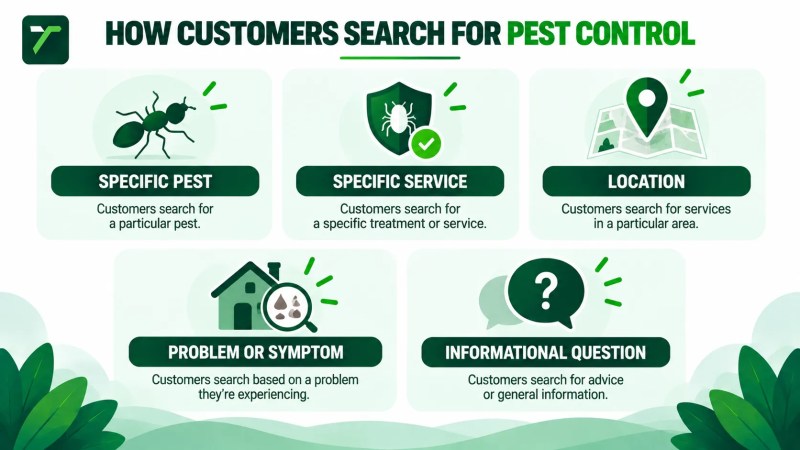
These searches can reflect different customer needs. Someone researching signs of an infestation may need information first, while someone looking for a specific pest-control service in a nearby area may be evaluating providers.
That is why keyword planning should map search demand to the page that best satisfies the underlying need instead of repeatedly placing every keyword on the homepage. Traffisite’s guide to local SEO keyword research explains how service and location intent can be evaluated more systematically.
Build Pages Around Pest Control Services
When a pest-control company offers several distinct services, important services should be easy to find and understand on the website.
Instead of expecting one general pest-control page to explain every treatment in depth, separate service pages can provide focused information where the services are genuinely different. Depending on the company’s actual offerings, that structure might include pages for termite control, rodent control, mosquito control, bed bug treatment, ant control, inspections, or other meaningful service categories.
A useful service page should answer the questions a potential customer needs before taking the next step. That can include:
- What problem or pest the service addresses
- What signs may indicate the service is relevant
- What the service generally involves
- Which properties or situations it applies to
- Where the service is available
- What the customer should do next
The exact content should reflect the company’s real service rather than using interchangeable copy across multiple pest pages.
Match One Page to One Clear Search Need
Separate pages are most useful when they represent genuinely different customer needs. Creating multiple pages that say almost the same thing with only a pest name or location changed can make it harder to give each URL a clear purpose.
A clearer approach is to decide what each page is responsible for before writing it. Service pages can explain commercially important treatments, while supporting articles can answer narrower educational questions related to those services.
This distinction is explored further in Traffisite’s comparison of service pages vs blog posts.
Target Locations Without Creating Thin Pages
Location targeting matters when a pest-control business serves multiple cities or communities. The goal is to make the company’s real service coverage understandable while giving each location page a useful reason to exist.
Before creating a location page, determine whether the business actually serves that area and whether a dedicated page can provide meaningful information for customers there.
A useful location page may explain:
- The pest-control services available in that area
- How customers in the area can request service
- Relevant service-area boundaries or coverage information
- Local considerations that genuinely affect the service
- How the location relates to the company’s broader service network
If a group of location pages differs only by place name while the rest of the content remains essentially interchangeable, the structure and purpose of those pages deserve closer review.
Connect Services and Locations Deliberately
A pest-control website may need both service pages and location pages, but those page types serve different purposes. Service pages explain what the company does. Location pages explain where those services are available and provide useful context for customers in that market.
Internal links can connect those relationships naturally. A location page might point visitors toward the pest services available there, while a service page can help visitors understand relevant coverage without duplicating an entire location-page template.
Businesses operating across several markets can also review Traffisite’s guidance on local SEO for multiple locations when planning how location-specific visibility should fit into the broader site.
Strengthen Local Search Visibility
For pest-control businesses serving defined geographic markets, the website is only one part of the local search presence customers may encounter.
Google Business Profile is another area to review when a business is eligible to maintain one. According to Google’s Business Profile eligibility guidelines, qualifying businesses generally need to make in-person contact with customers during their stated hours. Google’s guidelines for representing a business also require profiles to reflect the business accurately, including applicable address or service-area information.
Traffisite’s Google Business Profile optimization guide covers profile elements businesses can review as part of their local search presence.
Keep Business Information Consistent
Core business information should accurately represent the company across the places where potential customers may encounter it. That includes the business name, contact information, website destination, operating details, and service information where applicable.
Local visibility should support the same service and location strategy used on the website. A profile, service page, and location page should not communicate conflicting information about what the company offers or where it operates.
Create Useful Pest Control Content
Pest-control customers may research a problem before they are ready to contact a company. That creates useful content opportunities beyond direct service pages.
For example, supporting content might address:
- Signs associated with a particular pest problem
- Common conditions that can contribute to pest activity
- What homeowners can inspect safely before requesting service
- Questions about pest behavior or seasonal activity
- What to expect before or after a particular professional service
- How different pest problems can be distinguished when that distinction can be explained responsibly
The strongest topics are those that genuinely help the company’s potential customers and connect naturally to services the business actually provides.
Use Seasonal Topics Carefully
Seasonal pest content should be based on the specific pest and market being discussed rather than broad assumptions that apply the same seasonal pattern everywhere.
When publishing seasonal guidance, explain the geographic context and use reliable sources for factual claims about pest behavior, public-health concerns, pesticides, or treatment safety.
Build Topic Relationships Instead of Random Posts
A termite service page, for example, could be supported by useful articles about identifying warning signs, understanding inspection considerations, or preparing for a professional visit. Those supporting articles can then link back to the relevant service when that is the logical next step for the reader.
This creates a clearer relationship between informational content and commercial pages than publishing unrelated posts solely because individual keywords have search volume. Traffisite’s guide to topical authority and topic clusters explains how related pages can be organized around broader subject areas.
Organize the Website Around Clear Relationships
As a pest-control website expands across services, locations, and educational topics, structure becomes increasingly important.
A simple conceptual hierarchy might look like this:
- Core pest-control offering
- Individual pest or treatment services
- Service-area or location pages where justified
- Supporting educational content
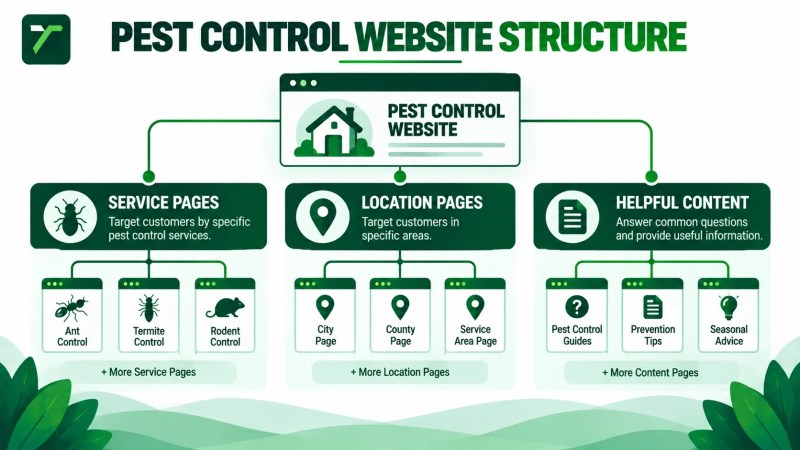
The exact hierarchy should reflect the company’s actual services and markets rather than forcing every pest-control business into the same template.
Important pages should also be connected through useful navigation and contextual internal links. A visitor reading about signs of a rodent problem, for example, should be able to reach the relevant service page without having to return to the homepage and start again.
Traffisite’s website structure for SEO guide provides a broader framework for organizing services, locations, and supporting pages into a coherent site.
Avoid Isolated Important Pages
Creating a page does not automatically make it well integrated into the website. Important service and location pages should have logical relationships with other relevant pages rather than existing as isolated URLs.
Internal links can help users move between related topics and, when implemented as crawlable links, can also help Google discover other pages on a site. Google’s link best practices specifically recommend linking important pages from other pages on the site. Traffisite’s internal linking guide explains how contextual links can support those relationships.
Measure What Your SEO Is Producing
Pest control SEO should be evaluated using a combination of search-performance and business metrics rather than a single ranking for one broad keyword.
Useful areas to monitor can include:
- Search visibility for important service and location pages
- Search queries associated with those pages
- Crawling and indexing status for priority URLs
- Organic visits to commercially important pages
- Relevant enquiries or other measurable conversions attributed to organic traffic
- Local search performance where local visibility is part of the strategy
The right reporting setup depends on what the business is trying to achieve. Search visibility can show whether relevant pages are gaining exposure, while enquiry and conversion data can help evaluate whether that visibility is contributing to meaningful business actions.
Pest Control SEO FAQ
What is pest control SEO?
Pest control SEO is the process of improving a pest-control company’s visibility for relevant searches involving its services, locations, pest problems, and related customer questions.
Does a pest-control company need a page for every pest?
Not necessarily. A separate page is most useful when the pest or treatment represents a distinct service or customer need that deserves dedicated information. Creating many nearly identical pages solely to target keyword variations can make it harder for each page to serve a clear purpose.
Should pest-control companies create location pages?
Location pages can be useful when the company genuinely serves those areas and each page can provide meaningful information for customers in that market. They should have a clear purpose beyond simply changing the location name.
Should pest-control companies write blog posts?
Blog content can be useful when potential customers need information before choosing a service. Topics such as pest signs, prevention considerations, seasonal questions, and service preparation can support relevant service pages when the content is accurate and useful.
Is Google Business Profile important for pest control SEO?
For an eligible pest-control business pursuing local visibility, Google Business Profile can be one part of its local search presence. Google explains that Business Profiles can appear on Google Maps and Search, while eligibility depends on the type of business and how it interacts with customers.
How long does pest control SEO take?
There is no universal timeline. The starting condition of the website, market, competition, technical issues, content coverage, local presence, and work being implemented can all affect progress. Performance should therefore be monitored over time rather than promised against a fixed deadline.
Build Search Visibility Around the Services Customers Actually Need
Pest control SEO works best when the website reflects how the business actually operates: what pest problems it addresses, which services it provides, where those services are available, and what information customers need before contacting the company.
That means building clear service pages, using location pages selectively, maintaining accurate local business information, answering useful pest-related questions, connecting related pages, and measuring whether the resulting visibility reaches potential customers.
For pest-control companies developing a broader organic search program, Traffisite’s SEO for service businesses guide explains how services, content, website structure, and search visibility can work together across a service-business website.