

Local SEO can produce a long list of numbers, but not every number deserves to become a key performance indicator.
For a service business, useful local SEO KPIs should help answer practical questions: Are more potential customers finding the business? Are they reaching important pages? Are they taking meaningful actions? And, where tracking allows it, is local search contributing to qualified leads and business opportunities?
Quick Answer: Useful local SEO KPIs typically cover four levels of performance: search visibility, website activity, lead or conversion activity, and business outcomes. Metrics such as impressions, clicks, search visibility, calls, form submissions, bookings, and qualified leads can all be useful, but the right KPIs depend on the business objective and measurement setup. The goal is to select measurements that help evaluate meaningful progress rather than reporting every number available in SEO and analytics platforms.
Local SEO KPIs vs Metrics
A metric is something you can measure. A KPI is a measurement you have selected because it helps evaluate progress toward an important objective.
That distinction matters because local SEO platforms can provide many measurements. Reporting all of them without deciding which ones matter can make performance harder to interpret rather than easier.
For example, impressions can provide useful information about search visibility. Website clicks can show whether searchers are moving from a search result to the website. Form submissions or tracked calls can indicate lead activity. Depending on the business and its tracking setup, qualified leads or booked jobs may bring reporting closer to business impact.
A useful reporting structure therefore moves from visibility toward business outcomes instead of treating every available number as equally important.
If you need a broader framework for organizing search data, Traffisite’s SEO measurement and reporting guide explains how measurement fits into the wider SEO process.
Think in Layers of Performance
A practical local SEO measurement framework can be organized into four layers:
- Visibility: Are potential customers encountering the business in search?
- Website activity: Are searchers reaching and interacting with useful pages?
- Lead activity: Are visitors completing actions that can become inquiries or customers?
- Business impact: Are those leads contributing to meaningful business outcomes?
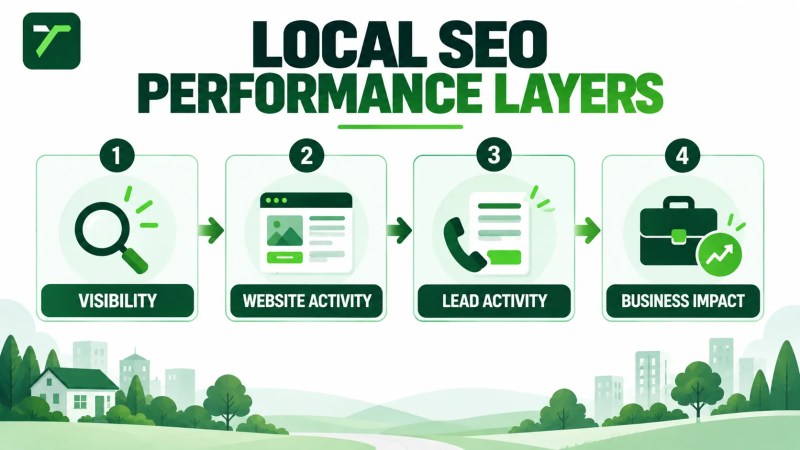
Not every business will have reliable tracking at every layer. The important point is to understand what each KPI can and cannot tell you.
Search Visibility KPIs
Visibility metrics help show whether a business is being discovered through search before the visitor reaches the website or contacts the company.
These measurements can provide early evidence of changes in search performance, but they should be interpreted alongside website and lead data whenever those measurements are available.
Search Impressions
Google Search Console reports impressions to show how often someone saw a link to your site in Google Search. Viewed over time and alongside other measurements, impression data can help provide context about changes in search visibility.
Impressions should not be interpreted as leads or customers. A link can receive an impression without receiving a click, and a click does not by itself show that an inquiry occurred.
Organic Clicks
In Google Search Console, a click is recorded when someone clicks a link from Google to your site. Reviewing clicks across important pages, queries, and periods can help identify which parts of the site are attracting search traffic.
The context matters. More clicks to an informational article do not necessarily have the same business significance as increased qualified traffic to an important service page.
Search Position and Local Visibility
Google Search Console reports average position for links to your site in Google Search and lets you analyze performance using dimensions such as queries, pages, countries, and devices.
Position is a useful diagnostic metric, but it should not become the only definition of SEO success. Search performance is more informative when considered alongside clicks, inquiries, and other outcomes.
Businesses reviewing their broader local presence can use Traffisite’s local SEO reporting guide to organize these measurements into a more useful reporting process.
Website Performance KPIs
Once a searcher reaches the website, the measurement question changes. Instead of asking whether the business appeared in search, you need to understand whether visitors are reaching pages that support their next decision.
Website analytics can provide useful context. For example, Google Analytics includes acquisition reporting that can connect behavior and engagement with where users came from, while its landing-page reporting identifies the first page visitors reached on the site.
Organic Visits to Important Pages
Do not evaluate organic traffic only as a sitewide total. Review whether search visitors are reaching commercially important pages such as core service pages, relevant location pages, and other pages that help potential customers evaluate the business.
This gives traffic data more context by connecting it with the parts of the website intended to support customer acquisition.
Landing-Page Performance
Google Analytics defines a landing page as the first page a visitor sees when arriving on a website, and its Landing page report shows how many visitors land on each page.
A page receiving impressions but relatively few visits may require a different investigation from a page receiving traffic but producing few meaningful actions. The measurement should lead to a useful question rather than simply filling a report.
Engagement Metrics
Engagement measurements can provide supporting context about how visitors interact with the website, but they should be interpreted according to the page’s purpose.
A person who quickly finds a phone number and contacts the business may behave differently from someone reading a detailed guide. Engagement metrics therefore need context and are generally more informative when reviewed alongside conversion and lead data.
Lead and Conversion KPIs
For many service businesses, local SEO reporting becomes more useful when website activity can be connected to inquiries.
The appropriate conversion actions depend on how customers contact the business. Examples may include:
- Quote-request form submissions
- Contact-form submissions
- Tracked phone calls
- Online bookings
- Other clearly defined lead actions relevant to the business
These measurements move reporting beyond traffic by showing whether search visitors are taking actions that can contribute to the sales process.
Organic Conversions
A conversion becomes more useful as a KPI when the tracked action represents something meaningful to the business. Define which website actions matter and configure measurement around those actions rather than giving every interaction equal importance.
Leads From Organic Search
When the measurement setup allows it, tracking leads attributed to organic search can provide more business context than traffic alone.
Attribution still needs careful interpretation because attribution models determine how credit for important actions is assigned to touchpoints in the customer journey. Not every lead also has equal commercial value, so lead counts become more useful when the business can evaluate lead quality.
Traffisite’s guide to local SEO lead generation provides additional context on how local visibility and website structure can support the process of generating inquiries.
Business Impact KPIs
The closer local SEO reporting gets to actual business outcomes, the more useful it can become for decision-makers.
This level of measurement often depends on the company’s CRM, call tracking, booking system, sales process, and internal data.
Qualified Leads
A qualified lead can provide more context than a raw inquiry count when the business has a consistent way to determine whether an inquiry matches the services, market, and customer profile it wants to serve.
For example, a rise in form submissions may appear positive until the business discovers that many of those inquiries are irrelevant. Connecting marketing data with lead quality provides additional context.
Booked Jobs or Customers
Where reliable tracking is available, businesses may be able to evaluate how many leads progress into appointments, booked jobs, or customers.
This can help connect marketing activity with later business outcomes, but only when the underlying tracking supports that conclusion. Avoid presenting revenue or customer attribution as precise when the available systems cannot reliably provide that level of certainty.
Revenue or Value From Organic Leads
Some businesses may be able to connect completed sales or customer value with an acquisition source. When that connection is supported by reliable data, it can provide useful business context beyond rankings or traffic.
Not every service business will have this tracking in place, and that does not make earlier-stage KPIs useless. It simply means reporting should be clear about how far the available data can follow the customer journey.
Google Business Profile Metrics
For verified Business Profiles, Google provides performance data showing how people discover the profile through Search and Maps and how they interact with it.
Available Business Profile performance metrics can include views, searches, calls, direction requests, website clicks, messages, and bookings, although Google notes that not every metric applies to every business.
These measurements should be interpreted as part of the broader local SEO picture rather than as a separate scorecard.
For businesses still improving the underlying profile, Traffisite’s Google Business Profile optimization guide covers the areas worth reviewing.
Connect Profile Activity With Business Outcomes
A change in profile activity can provide information about how people are discovering or interacting with the business on Google, but the reporting question should continue beyond the profile itself.
Where measurement allows, determine whether changes in local visibility and customer interactions correspond with changes in qualified inquiries, bookings, or other meaningful outcomes.
This keeps the reporting focused on what the business ultimately wants local search to support.
How to Choose Local SEO KPIs
The right KPI set should reflect the business rather than a generic SEO dashboard.
Start by defining what local SEO is expected to accomplish. Then work backward to identify the measurements that can help evaluate progress toward that outcome.
A practical process is:
- Define the business objective. Decide whether the priority is greater visibility, more qualified inquiries, bookings, revenue, or another measurable outcome.
- Map the customer journey. Identify how a potential customer moves from search visibility to the website, inquiry, and eventual sale.
- Choose KPIs for the important stages. Select measurements that help evaluate whether those stages are improving.
- Confirm what can be tracked reliably. Do not build reports around data the business cannot measure consistently.
- Separate KPIs from diagnostic metrics. Keep supporting data available without giving every metric equal prominence.
- Review trends and context. Evaluate changes over appropriate periods and investigate what may be influencing them.
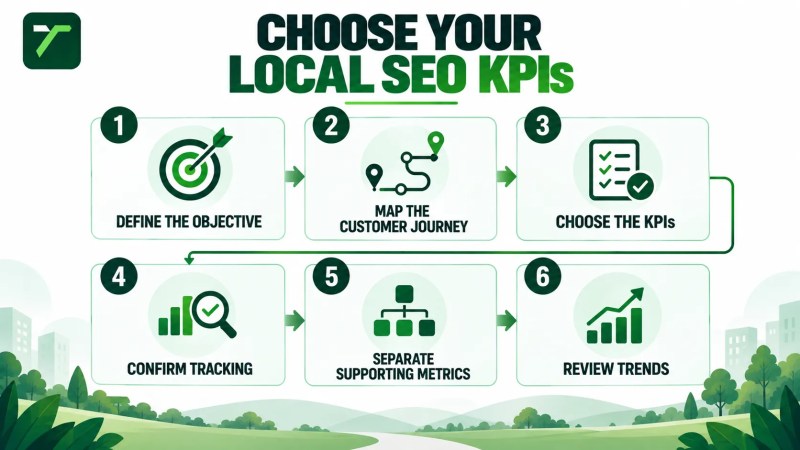
A business focused on generating more inquiries may prioritize qualified leads while still using impressions, clicks, landing-page traffic, and rankings as supporting diagnostic metrics.
If generating local inquiries is the broader objective, Traffisite’s generate more local leads solution provides additional context around that goal.
Keep the KPI Set Focused
A useful report does not need every number available in every SEO platform.
Start with the measurements that answer important business questions. Supporting metrics can then be used to investigate why a primary KPI moved.
For example, if organic inquiries decline, supporting data may help determine whether the change coincided with reduced search visibility, fewer website visits, weaker performance on an important landing page, or another change in the customer journey.
This creates a useful hierarchy in the report: primary KPIs show what happened to the outcomes the business cares about, while supporting SEO metrics provide context for investigating why performance changed.
Local SEO KPI FAQ
What are the most important local SEO KPIs?
The most useful KPIs depend on the business objective and available tracking. Search visibility, organic clicks, traffic to important pages, calls, form submissions, bookings, qualified leads, and business outcomes can all be useful at different stages of the measurement process.
Are local rankings a KPI?
Rankings can be useful for monitoring visibility for selected searches and locations, but they provide only one part of the performance picture. They are generally more useful when evaluated alongside search traffic, conversions, leads, and business outcomes.
Should local SEO reports include traffic?
Organic traffic can provide useful context, especially when reporting separates commercially important landing pages from less relevant traffic. Traffic alone does not show whether visitors became qualified inquiries or customers.
How should a local business measure SEO leads?
First define which actions count as leads, such as relevant form submissions, tracked calls, or bookings. Then use the available analytics, call-tracking, booking, or CRM systems to connect those actions with their acquisition source as reliably as the measurement setup allows.
How often should local SEO KPIs be reviewed?
The appropriate reporting frequency depends on the business, the KPI, the amount of available data, and how frequently the team can act on the findings. The important point is to use comparable periods and enough context to avoid making decisions from isolated fluctuations.
Measure Local SEO From Visibility to Business Impact
Local SEO KPIs are most useful when they tell a connected story rather than presenting a collection of unrelated numbers.
Start with search visibility, then follow the customer journey through website activity and lead generation. Where reliable tracking exists, continue into qualified leads, booked work, customers, or other meaningful business outcomes.
Supporting metrics still matter because they help investigate why performance changed. But the primary KPI set should stay focused on the outcomes the business actually wants local search to support.
If your business needs help connecting local search strategy, implementation, and measurement, Traffisite’s local SEO services are the most relevant service-level next step.