

Local SEO citations can spread a business’s information across search platforms, directories, industry websites, and local organizations. The challenge is not simply getting listed in more places — it is knowing which listings matter, keeping important information accurate, and managing citations as part of a broader local search strategy.
Quick Answer: Local SEO citations are online mentions of a business that can include information such as its name, address, phone number, website, and other business details. For service businesses, citation management means identifying listings that matter, keeping important information accurate, correcting outdated or duplicate information where possible, and treating listings as one part of a broader local SEO strategy rather than the entire strategy.
What Are Local SEO Citations?
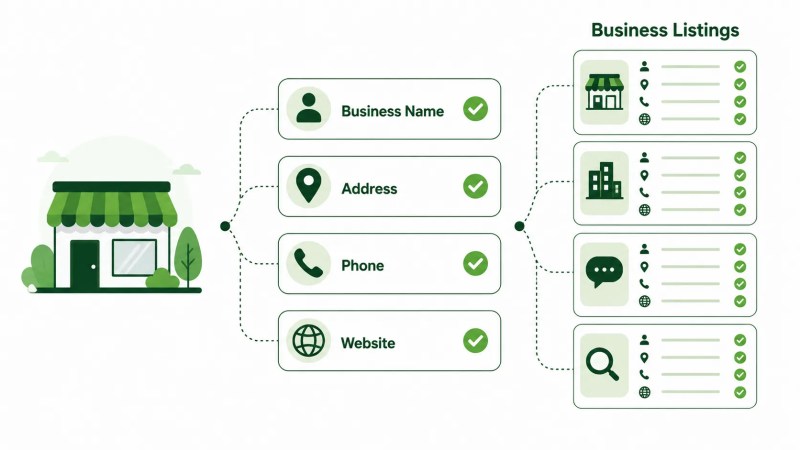
In local SEO, the term citation generally refers to an online mention of a business and identifying information associated with it. Depending on the source, a citation may include the business name, address, phone number, website, hours, category, services, or other details.
Many citations appear as structured business listings in directories, maps, industry platforms, professional organizations, and similar sources. Other mentions may be less structured, such as a business being referenced on a local organization’s website.
For service-business owners, the practical issue is straightforward: information about your company can exist across many websites, and those references may become outdated as the business changes.
Managing those references is one component of local SEO services, but citations should not be treated as a standalone solution for local visibility.
What Information Can a Local Citation Include?
A business listing commonly contains some combination of:
- Business name
- Street address, when applicable
- Service area
- Phone number
- Website address
- Business category
- Opening hours
- Services
- Business description
The exact information available depends on the platform. The important point is that information customers rely on should accurately represent the business.
Structured and Unstructured Citations
It can be useful to think about citations in two broad groups.
Structured citations place business information into predefined fields. A directory listing, for example, may have separate fields for the company name, phone number, website, category, and address.
Unstructured citations mention a business within ordinary content rather than a standardized listing. Examples might include an organization mentioning a member business, a supplier referencing a partner, or a local website discussing a company.
The distinction is useful for understanding where business information appears, but service businesses do not need to pursue every possible mention simply because it can be classified as a citation.
Why Citation Consistency Matters
Citation consistency means keeping important business information accurate across the sources where the company appears.
For customers, inconsistent information creates an obvious problem. Someone may find an old phone number, visit a former address, follow an outdated website link, or see hours that no longer reflect when the business operates.
That is why citation management should begin with accuracy rather than volume.
What Does NAP Consistency Mean?
In local SEO terminology, NAP is commonly used as shorthand for Name, Address, and Phone number.
These are important details to review because they directly identify and connect customers with the business.
However, citation auditing should not stop with those three fields. Website URLs, business hours, categories, service information, and other important details can also become outdated.
Consistency Does Not Mean Every Listing Must Look Identical
Different platforms format business information differently. One source might abbreviate a street name while another spells it out, for example.
The practical objective is to keep the underlying business information accurate and avoid meaningful conflicts, such as different phone numbers, obsolete addresses, incorrect websites, or listings for businesses that no longer operate at a location.
Do not spend disproportionate amounts of time trying to make harmless formatting differences identical everywhere.
Where Local Citations Appear
Local citations can appear across many types of websites. The right sources depend on the business, industry, geography, and where potential customers actually look for information.
Common categories include:
- Major search and map platforms
- General business directories
- Industry-specific directories
- Professional associations
- Local business organizations
- Chambers and membership organizations
- Supplier or partner websites
- Relevant community websites
This does not mean every business should create a listing on every available directory. A smaller group of accurate, relevant listings can be more manageable and useful than maintaining profiles across large numbers of low-value websites.
General Business Listings
General business directories can provide customers with another place to find contact and company information. Their usefulness varies, so prioritize sources that are legitimate, maintained, and relevant to the market you serve.
Industry-Specific Listings
An industry-specific directory or professional association may be particularly relevant because its audience and subject matter are already connected to the business’s services.
For example, a contractor, professional firm, or specialist service provider may have legitimate industry organizations or membership directories available within its field.
Do not join organizations or pay for listings purely because someone labels them an SEO citation. Evaluate the source on its actual relevance and usefulness.
Local Organizations and Community Sources
Businesses may also appear on websites connected to their geographic market. These can include local organizations, memberships, sponsorships, partnerships, or community resources where there is a genuine relationship.
The goal should be a legitimate business presence, not manufacturing mentions solely to increase a citation count.
How to Audit Local Citations
A citation audit helps you identify where important business information is correct, outdated, incomplete, or duplicated.
Before reviewing individual listings, establish the current information that should be treated as accurate.
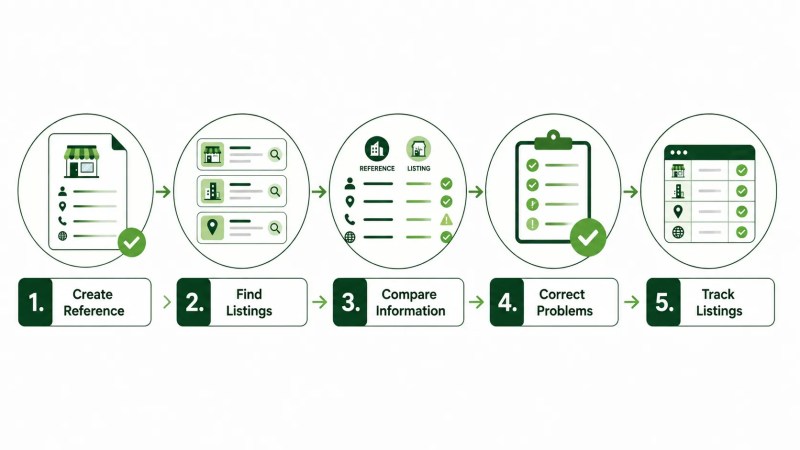
Step 1: Create a Business Information Reference
Document the business information your team should use when creating or updating listings. Depending on the business, this may include:
- Official business name
- Current address or applicable service-area information
- Primary phone number
- Preferred website URL
- Business hours
- Primary business category
- Core services
- Short business description
This gives whoever manages listings a consistent reference rather than requiring them to reconstruct the information for every platform.
Step 2: Find Existing Listings
Review the major platforms and relevant directories where the company is already represented. Search for variations of the business name, previous phone numbers, former addresses, and other information that could reveal older listings.
If the company has moved, rebranded, changed phone numbers, or acquired another business, pay particular attention to information associated with those changes.
Step 3: Compare Important Information
For each important listing, compare the information with your current business reference.
Look for issues such as:
- Incorrect business names
- Former addresses
- Old phone numbers
- Broken or outdated website links
- Incorrect hours
- Wrong categories
- Duplicate listings
- Listings representing closed or former locations
Step 4: Correct High-Priority Problems
Start with listings that customers are most likely to encounter and errors that could materially affect their ability to contact or understand the business.
An incorrect phone number on an important listing deserves more immediate attention than a minor formatting difference on an obscure directory.
Step 5: Keep a Record of What You Manage
Maintain a simple record of important listings, their URLs, login or ownership status, information reviewed, and the date of the most recent check.
This makes future maintenance easier, especially when business information changes.
Which Citations Should You Prioritize?
One of the easiest citation strategies to get wrong is focusing on quantity instead of relevance.
Rather than asking, “How many directories can we submit to?” ask, “Which sources actually matter for this business?”
A practical priority order is:
- Major platforms customers use to find or evaluate the business.
- Relevant industry directories and professional organizations.
- Legitimate local organizations and geographically relevant sources.
- Other reputable business directories that provide a useful and maintainable listing.
This approach keeps the work focused and makes ongoing maintenance more realistic.
Be Selective With Local SEO Directories
A directory should not automatically become a priority simply because it accepts business submissions.
Before creating a local SEO listing, consider whether the website is legitimate, relevant to the business or market, maintained, and potentially useful to customers.
Be cautious about services promising large numbers of directory submissions without explaining where those listings will appear or why those sources matter.
Look Beyond Directory Listings
Some useful business mentions may come from genuine relationships rather than directory submissions.
Industry associations, local organizations, partnerships, suppliers, sponsorships, and other relevant relationships may create legitimate opportunities for a business to be referenced online.
When those opportunities also involve links to the website, they overlap with a broader link building and authority strategy.
How Citations Fit Into a Broader Local SEO Strategy
Local citations are one part of local SEO. They should support the broader search presence rather than become the entire strategy. Understanding the difference between local SEO and traditional SEO can also help clarify why business listings are only one component of improving local visibility.
A service business also needs to consider its Google Business Profile, website, service content, geographic relevance, reviews, internal linking, technical foundations, and measurement.
Traffisite’s local SEO guide provides a broader framework for connecting these areas.
Business Listings and Your Website Should Agree
When important business information changes, update the website and priority listings as part of the same process.
Your website should also clearly explain the services the company actually provides and the markets it genuinely serves.
For businesses serving defined geographic markets, a clear website structure can help organize service and location information. The website structure for SEO guide explains how related pages can be organized into a clearer hierarchy.
Connect Citations With Reputation Management
Some business-listing platforms also allow customers to leave reviews. That means listing management and reputation management may overlap operationally even though they are not the same task.
Keep profile information accurate, make it easy for customers to reach the correct business, and develop a consistent process for handling genuine customer feedback.
Do Not Ignore the Rest of the Website
Fixing business listings will not solve weak service pages, confusing site architecture, technical problems, or content that fails to answer potential customers’ questions.
If the broader website needs attention, an SEO audit can be used to identify issues across multiple areas rather than evaluating citations in isolation.
Measure Outcomes, Not Just Listing Counts
A report showing that dozens of listings exist is not enough to demonstrate that a local SEO strategy is working.
Depending on the data available to the business, useful outcomes may include local search visibility, organic traffic to important pages, qualified inquiries, calls, form submissions, bookings, and other meaningful conversions. For service businesses focused on customer acquisition, those measurements should ultimately connect with the wider goal to generate more local leads.
Traffisite’s guide to SEO measurement and reporting explains how to connect SEO activity with useful performance indicators.
Local SEO Citation Checklist
Use this checklist when reviewing citations and business listings:
- Document the business information that should be considered current.
- Review major search, map, and business-listing platforms.
- Identify relevant industry-specific directories.
- Check legitimate local organizations and membership sources.
- Look for old addresses, phone numbers, and website URLs.
- Identify duplicate or obsolete listings.
- Correct high-priority inaccuracies first.
- Check important categories, hours, and service information.
- Prioritize relevant sources rather than maximizing directory count.
- Keep a record of important listings and when they were reviewed.
- Update priority listings when core business information changes.
- Review citations alongside the website, reviews, and broader local search strategy.
- Measure business outcomes rather than reporting listing quantity alone.
Local SEO Citations FAQ
What are local SEO citations?
In local SEO terminology, citations are online mentions of a business that contain identifying information such as its name, address, phone number, website, or other business details. They commonly appear in business directories, map platforms, industry websites, professional organizations, and local sources.
What does NAP mean in local SEO?
NAP is commonly used in local SEO as shorthand for Name, Address, and Phone number. These are core pieces of business information commonly reviewed during citation management. Businesses should also pay attention to other useful information such as website URLs, hours, categories, and services.
Do all local citations need to be exactly identical?
The underlying business information should be accurate, but harmless formatting differences do not necessarily mean a listing is wrong. Focus on meaningful inconsistencies such as an incorrect phone number, former address, outdated website, wrong business name, or obsolete listing.
How many local SEO directories does a business need?
There is no useful universal number. The right set depends on the business, industry, location, and where customers are likely to look for information. Prioritize legitimate and relevant sources instead of pursuing directory quantity for its own sake.
Are more citations always better for local SEO?
Not necessarily. Creating large numbers of low-value listings can create additional information that must be maintained. A focused set of accurate and relevant business listings is generally a more practical approach than pursuing every available directory.
Should I pay for local business listings?
Evaluate the source rather than assuming a paid listing is either necessary or valuable. Consider whether the platform is relevant to your industry or market, whether potential customers use it, what the listing provides, and whether the cost makes sense for the business.
What should I do if my business moves?
Update the business’s own website and the important profiles and listings you control. Then review other significant sources for the former address and correct outdated information where possible. Keeping a record of your priority listings can make this process much easier.
Are citations enough for local SEO?
No. Citation management is only one part of a broader local SEO strategy. Service businesses should also consider their Google Business Profile, website content, service and location information, reviews, authority, technical SEO, internal linking, and performance measurement.
Where to Start
Start by establishing the correct information for your business, then review the listings that customers are most likely to encounter. Fix significant errors before spending time creating additional listings.
Once those foundations are under control, treat citation management as part of a wider search strategy rather than a recurring exercise in directory submission. For a broader framework, Traffisite’s SEO for service businesses guide explains how the different parts of organic search can work together.